

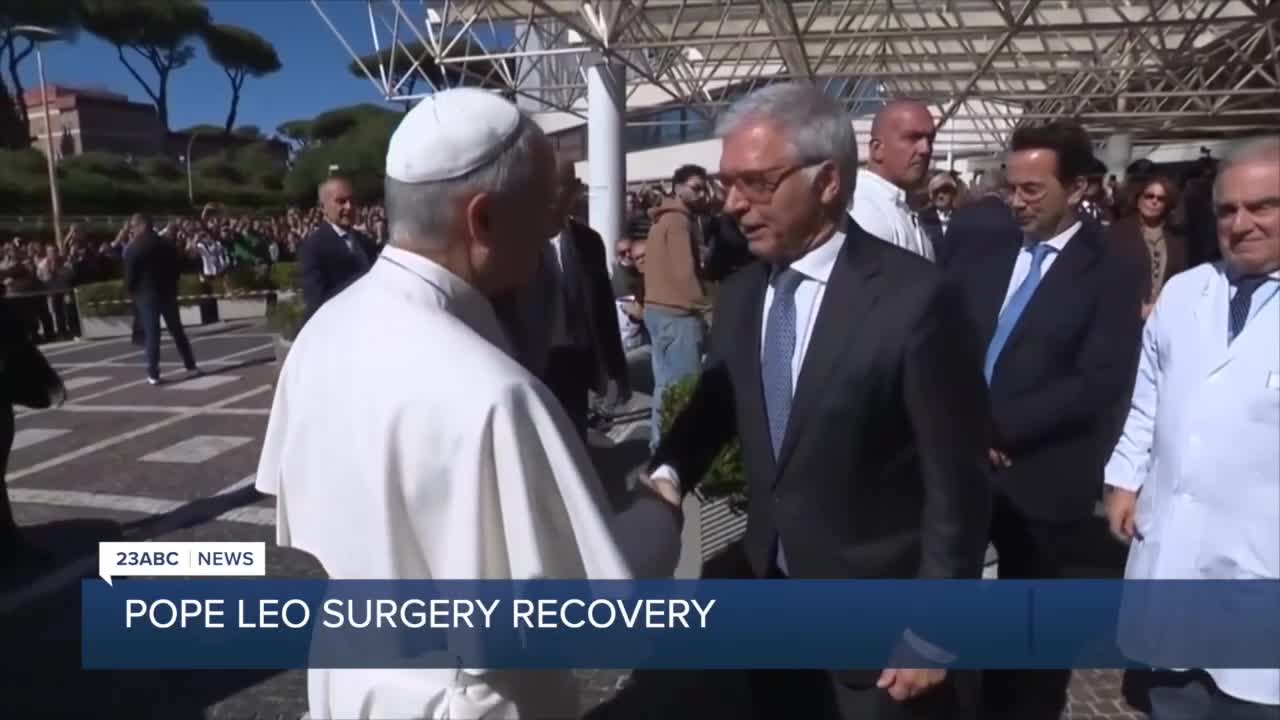


BAKERSFIELD, Calif. (KERO) — Pope Leo is recovering after surgery to remove a cancerous node from the lower lobe of his right lung, the Vatican says.
The procedure is drawing renewed attention to lung cancer awareness in Kern County, where local doctors are emphasizing the importance of early screening, individual risk factors, and available treatment options.
Dr. Ravi Patel, director of the Comprehensive Blood and Cancer Center, says Pope Leo was fortunate to have encountered the more treatable type of lung cancer.
"All the other cancers are called non-small cell lung cancers. Non-small cell lung cancers are much more treatable," Patel said.
The other form of lung cancer falls into a grouping called small cell lung cancer, which carries a significantly more serious prognosis.
"Small cell cancer is a very aggressive cancer. Untreated — you can die in three months," Patel said.
Kern County doctors say early detection can make a critical difference in the fight against lung cancer.
Patel says low-dose CT screenings can help doctors spot nodules or other abnormalities that may require further testing.
Patel also reminds residents that lung cancer can affect anyone, making it important to understand your individual risk.
The Center for Disease Control and Prevention states that high-risk factors for developing lung cancer include:
- Smoking tobacco
- Secondhand smoking
- Genetics
- Air pollution
- Radiation exposure
"It's very important to remember that lung cancer can happen in non-smokers. So if you have a cough, pain, discomfort — just make sure that you know you bring it to the attention of your physician," Patel said.
For those concerned about costs, the Blood and Cancer Center has previously offered free and low-cost CT scans during November for Lung Cancer Awareness Month, as well as treatment grants.
The CDC says the three most popular forms of treatment include:
- Surgery for early stage non-small lung cancer
- Radiation therapy in conjunction with chemotherapy
Local doctors are reminding high-risk adults between 50 and 80 that yearly screenings can help catch lung cancer early.
This story was reported on-air by a journalist and has been converted to this platform with the assistance of AI. Our editorial team verifies all reporting on all platforms for fairness and accuracy.
Stay in Touch with Us Anytime, Anywhere:
