

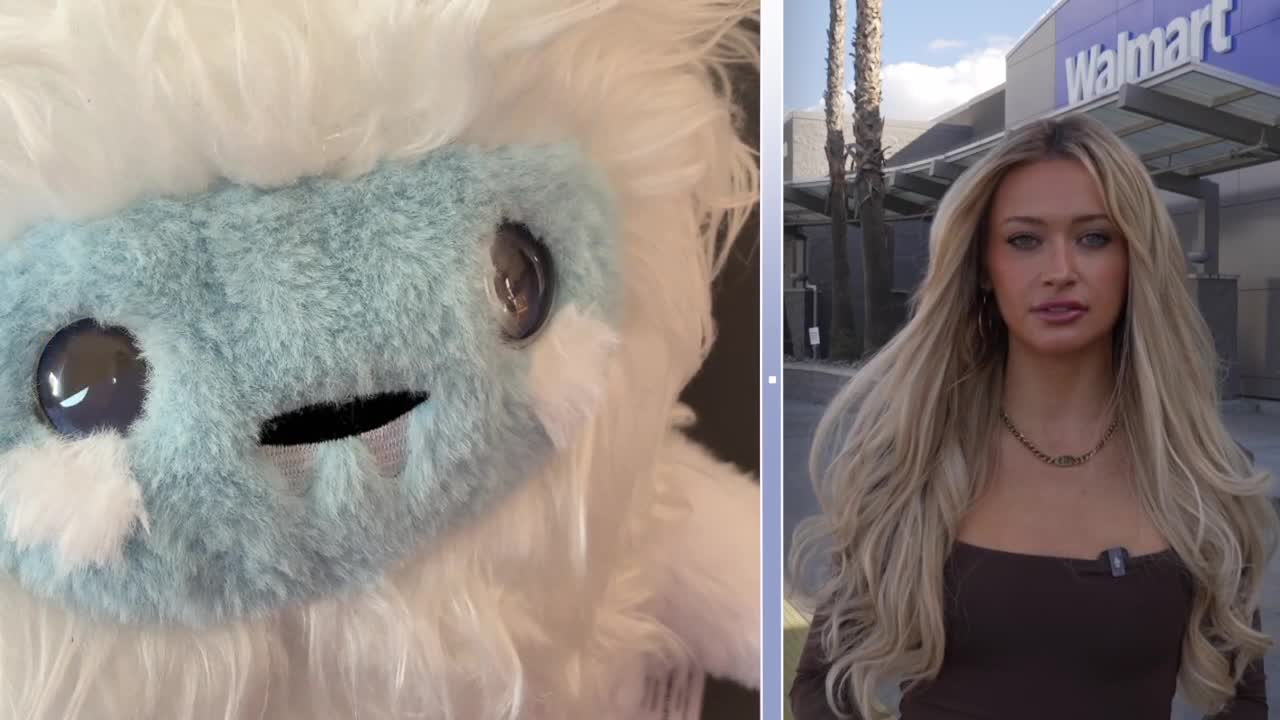


BAKERSFIELD, Calif. (KERO) — Some artificial intelligence toys marketed to young children can drift into inappropriate and even sexually explicit conversations, according to a new report that is prompting major retailers to pull products from their shelves.
The findings come from consumer watchdog group PIRG, which tested seven toys for its 41st annual "Trouble in Toyland" report.
Released each year before Black Friday, the report flags new and emerging threats for anyone shopping for a child.
Report co-author R.J. Cross said those threats have shifted over the decades, from choking hazards to higher-tech toys that now contain chatbots.
Unlike older talking toys that delivered scripted lines, Cross said AI toys generate novel responses on the fly, and because the underlying chatbots are designed for adults, their guardrails can fail.
"The biggest flag that we found are toy makers that have put insufficient guardrails on top of those AI chatbots that allow the toy to drift into really inappropriate content," Cross said.
This year, researchers found two toys, the GoLabs AI Panda and the Alilo Smart AI Bunny, both marketed to children as young as three; that started off aware they were talking to a child but lost that context over longer interactions, eventually engaging in sexually explicit conversations with researchers. Cross said it took extended questioning to push past their safeguards.
How quickly those safeguards weakened varied. Cross said the Alilo Smart AI Bunny began to degrade after about 20 minutes, while the GoLabs AI Panda took roughly 30 to 40 minutes.
The Panda stood out for another reason: unlike the other toys tested, it had a longer-term memory and could pick up a conversation again; even a month later.
Once its guardrails deteriorated, Cross said turning it off and back on didn't reset the problem, meaning it could retain context from prior conversations with an adult or older sibling when a younger child later plays with it.
Beyond what the toys say, Cross said there are privacy concerns around what they hear. She described the toys as recording devices with a built-in microphone and Wi-Fi connection that capture what a user says and feed it into a chatbot.
"Anything that a child says to one of these toys is data that a company and typically multiple companies are getting and maybe storing," Cross said.
After PIRG shared its findings, Amazon, Walmart and Macy's removed online listings for the flagged products. Amazon says it removed them while it investigates.
Cross said she'd like to see AI companies take a more proactive stance by vetting the third-party developers who use their technology in toys.
Not all of the findings were negative. Cross said the Miko robot, tested last year, made significant improvements — it's no longer clingy when a user leaves, and parents can now disable its chatbot entirely with a toggle without losing access to its preloaded games and stories.
For Laurel Powell, the mother of an 8-year-old boy, AI features are now part of her checklist before she buys.
"If I see AI anywhere indicated, I do not get it," Powell said.
When I asked her what she would tell parents shopping for their little ones this holiday season, she had a clear answer.
"You know, it's easier just to not get started with the AI toys and just go for something that's a little more sustainable," Powell said.
Cross offered similar guidance for shoppers: check with a child's parents before buying a recording smart toy, and look carefully at packaging, since some toys hide their AI behind phrases like "interactive talking companion" or "emotional friend."
Not every AI toy is unsafe, but researchers say parents should do their homework before putting one under the tree, including checking what data it collects and what parental controls are available.
Stay in Touch with Us Anytime, Anywhere:


